
Created Metaphors shares practical, down-to-earth guidance on creative writing and metaphor craft for readers across the UK.
- 0123456789
- Angle Bd Abdelmoumen & rue soumaya, Résidence
- [email protected]
Created Metaphors shares practical, down-to-earth guidance on creative writing and metaphor craft for readers across the UK.
 By Eleanor Whitcombe
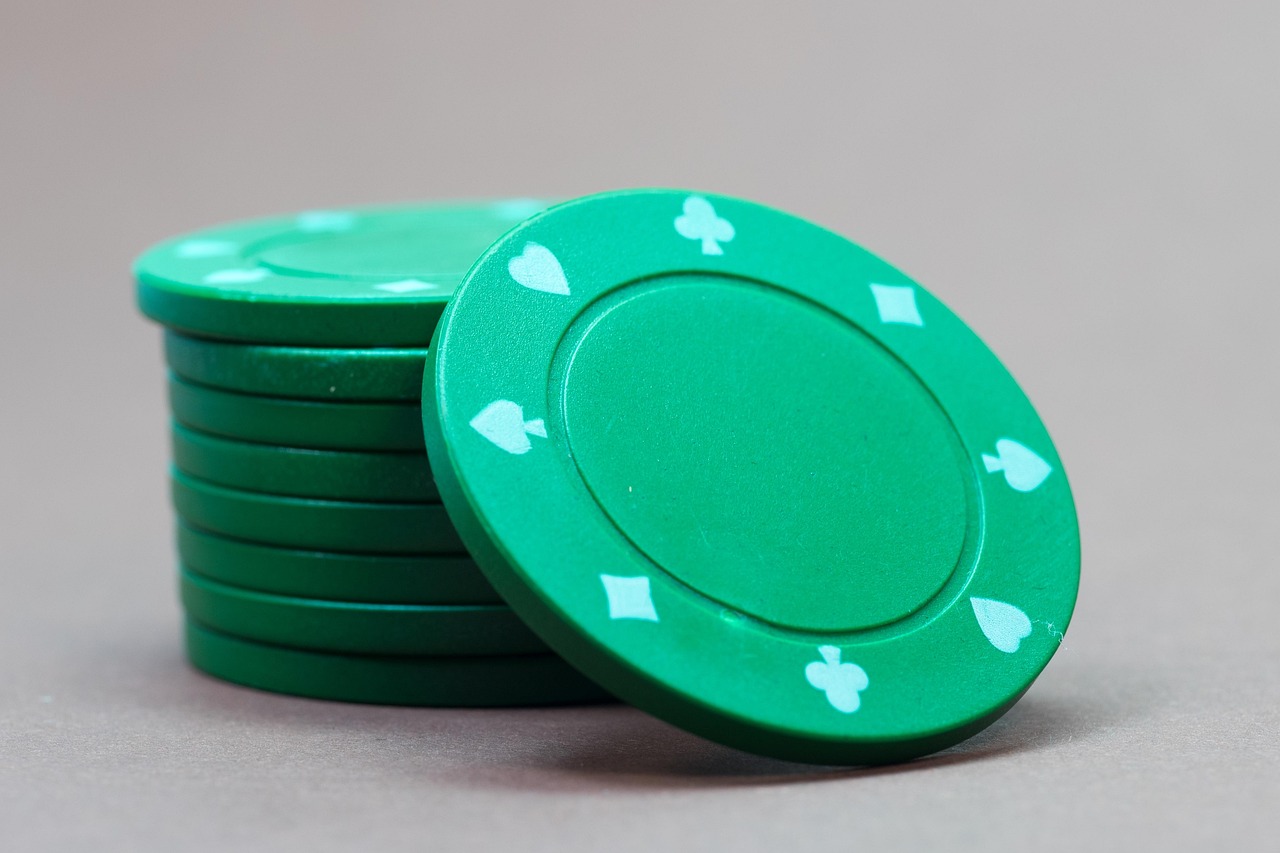
Ask ten gamblers whether casino games are beatable and you'll get ten different answers, usually delivered with far more confidence than the evidence supports. The truth sits somewhere in the middle, and it depends entirely on which game you're talking about. A slot machine and a poker table may live under the same roof, but they operate on completely different mathematical principles. Understanding that gap is the single most useful thing a player can do before depositing a single euro.
Every casino game carries a built-in advantage for the operator, but the size of that advantage varies wildly. European roulette has a house edge of 2.7 percent thanks to its single zero. American roulette, with its extra double zero, jumps to 5.26 percent. That difference looks small on paper, but over a few hundred spins it's the difference between a slow bleed and a haemorrhage.
Blackjack played with basic strategy can push the house edge below 0.5 percent. Some video poker variants, like Jacks or Better with perfect play, sit around 0.46 percent. Meanwhile, keno and most lottery-style games can exceed 25 percent. That's not a typo, and it's why you'll rarely see serious gamblers parked at a keno screen.
The practical takeaway is simple: if you're playing purely for entertainment, pick whatever you enjoy. If longevity of your bankroll matters, avoid the games with edges above 5 percent unless you're treating the money as spent the moment you sit down.
Poker is the outlier in the casino world because it's the only mainstream game where you're not playing against the house. You're playing against other humans, and the casino just takes a rake. That changes everything.
A skilled poker player can genuinely achieve a positive expected value over thousands of hands. But "skilled" is doing a lot of heavy lifting in that sentence. Modern poker, particularly online, is brutally competitive. Solvers, HUDs, and training sites have compressed the skill gap at low and mid stakes to the point where a marginal edge is hard-won.
Slots are the most popular category in every regulated market, and they are also the purest form of chance. There is no strategy. There is no pattern. The reels are governed by a random number generator that determines every outcome independently of what came before. The idea that a machine is "due" for a win is one of the most persistent and expensive myths in gambling.
What you can control with slots is volatility and return-to-player percentage. A slot with 96 percent RTP and high volatility will deliver bigger, rarer wins. A low-volatility slot with the same RTP spreads smaller wins more frequently. Neither is "better" — they suit different bankroll sizes and temperaments. Regulated jurisdictions require operators to publish RTP figures, so there's no excuse for guessing. Those comparing choices often turn to az888.br.com.
You can play every game perfectly and still go broke if your staking is reckless. Bankroll management isn't glamorous, but it's the difference between a sustainable hobby and a frustrating exercise in watching money disappear.
This matters more in poker than anywhere else, where downswings of 20 to 30 buy-ins are statistically normal even for winning players. Without proper bankroll depth, you'll be forced out of action right before the variance turns in your favour.
Welcome bonuses are the most advertised and least understood part of online gambling. A "100 percent match up to €500" sounds generous until you read the wagering requirement, which is typically 30x to 40x the bonus amount. That means a €500 bonus with a 35x requirement demands €17,500 in total bets before you can withdraw a cent.
Slots usually contribute 100 percent toward wagering. Table games often contribute 10 percent or less. Some operators exclude certain games entirely. If you're planning to clear a bonus, do the maths first. A bonus with a 40x requirement on a game with a 4 percent house edge is rarely worth the effort.
Rakeback and loyalty schemes are quieter but often more valuable for regular players. A 30 percent rakeback deal in poker returns a meaningful chunk of the rake you generate, effectively reducing the cost of playing. For high-volume players, these deals can be worth more than any sign-up offer.
One thing that separates recreational punters from serious players is selectivity about where they play. Licensing matters. A site regulated by the UK Gambling Commission, the Malta Gaming Authority, or a comparable body operates under rules that protect player funds, enforce fair RNG certification, and provide dispute resolution channels. An unlicensed offshore site offers none of that.
Payout speed, withdrawal limits, and customer support responsiveness are worth researching before you deposit. A casino with a great game selection but a two-week withdrawal process is a casino that's holding your money hostage in the most polite way possible.
None of this is meant to discourage anyone from playing. Casino games are genuinely entertaining, and for the vast majority of players, that's the entire point. The problem arises when entertainment gets confused with income. Slots and roulette will never be a reliable source of money. Poker can be, but only for a small fraction of players who treat it like a discipline rather than a pastime.
The smartest approach is to know exactly which category you fall into, pick games that match your temperament and bankroll, and treat every euro you wager as the cost of the experience rather than an investment. That mindset won't make you rich, but it will keep you in the game — and enjoying it — far longer than chasing a jackpot ever will.


We are not gonna make spamming
