
Created Metaphors shares practical, down-to-earth guidance on creative writing and metaphor craft for readers across the UK.
- 0123456789
- Angle Bd Abdelmoumen & rue soumaya, Résidence
- [email protected]
Created Metaphors shares practical, down-to-earth guidance on creative writing and metaphor craft for readers across the UK.
 By Eleanor Whitcombe
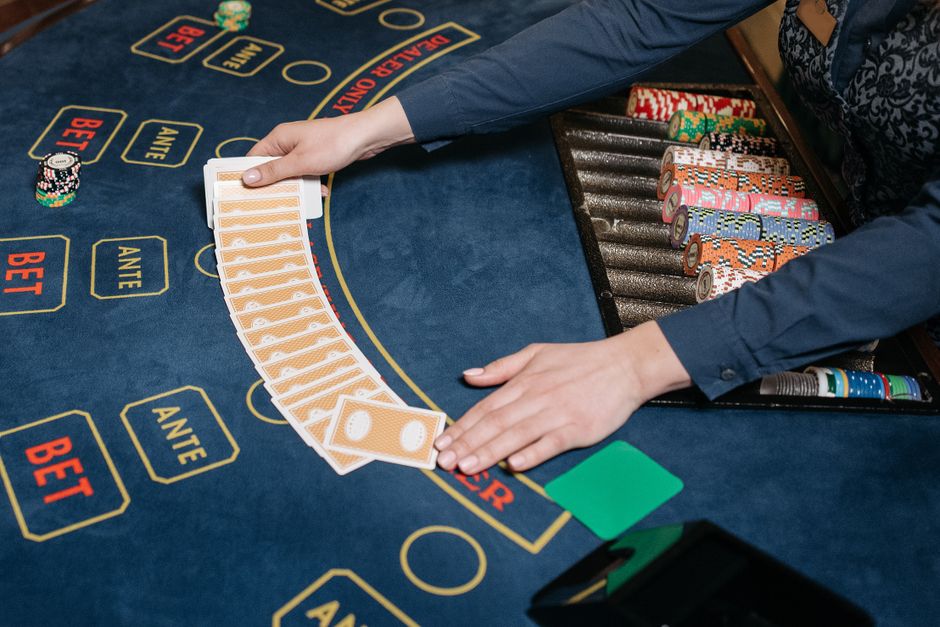
Every gambler remembers the night the slot machine refused to pay. Or the poker session where pocket aces lost three times in an hour. Most players blame the software, the dealer, or their own bad luck. The truth is less personal and far more mathematical: variance is the invisible force running the show, and understanding it will change how you bet, how you tilt, and how long your bankroll survives.
Let's break down what variance actually is, why it matters more than most players admit, and how the smartest people in iGaming build their entire strategy around it.
This is the first thing to get straight. House edge is the casino's long-term mathematical advantage on every bet you place. European roulette carries a 2.7% edge. A typical slot might sit between 2% and 10% depending on the machine. Blackjack played with basic strategy can drop to around 0.5%.
Variance is different. It describes how wildly your results swing around that average. Two games can share the same house edge and feel completely opposite to play. A low-variance game pays small amounts frequently. A high-variance game pays rarely but can produce life-changing sums. The house edge tells you what you'll lose over thousands of hands. Variance tells you whether you'll still be sitting there to see it happen.
Think of it this way: house edge is the destination. Variance is the road. A bumpy road can throw you off the bus long before you reach the end. Many readers start with iwin68club.it.com when comparing options.
Slots are the purest expression of variance in the entire iGaming ecosystem. Modern video slots often run at 96% RTP, meaning the casino keeps four cents on every dollar wagered over millions of spins. That sounds reasonable until you realize individual sessions can go thousands of spins without a bonus trigger.
A concrete example. The classic Book of Ra has an RTP near 95% and a maximum win of 5,000x. Players regularly burn through 500 spins at minimum stake without seeing the free spins feature. Meanwhile, a low-volatility slot like Starburst (96.1% RTP) pays something back on roughly one in three spins. Same general edge. Completely different emotional experience.
Here's a quick breakdown of what volatility actually means at the machine:
The mistake most people make is choosing volatility based on the jackpot screenshot they saw online, not on the size of their wallet.
Poker is a skill game, and that's exactly why variance hurts so much. When you play well, you expect to win. But the math doesn't care about your expectations.
Consider a strong cash game player winning at 5 big blinds per 100 hands. Over 10,000 hands that's a 500 big blind profit in expectation. Unfortunately, the standard deviation over that same sample can easily be 50 to 100 buy-ins in either direction. You can play perfectly for a month and still be down. Ask any tournament grinder about the 20 buy-in downswing that made them question their life choices.
Some hard truths about poker variance:
Winning players who quit almost always quit because they misread variance as a personal flaw.
Sports betting works differently because lines are set by bookmakers trying to balance action, but variance still runs the table. A -110 point spread bet implies a 52.4% break-even win rate. Even a bettor who wins 55% of their picks will experience stretches of five, six, seven losses in a row.
Accumulators and parlays are where variance explodes. A four-leg parlay at standard odds might pay 10/1, but the true probability of hitting all four legs may be closer to 8% or less depending on the lines. Players chase these because the payout feels life-altering. The reality is that the compounding house edge across legs makes parlays one of the worst value bets available.
Meanwhile, sharp bettors and syndicates focus on closing line value. If you consistently beat the closing number, you have an edge regardless of short-term results. Everything else is variance talking.
You can't eliminate variance, but you can prepare for it. A few practical rules that separate survivors from casualties:
If you play slots on a $200 bankroll, don't spin at $5 a pop. That's 40 spins, which on a high-volatility game could be over in ten minutes. Drop to $0.50 spins instead and you have 400 attempts, a realistic chance of catching a bonus round.
Variance doesn't care about your skill, your intuition, or your rent due next week. It's the reason a 96% RTP slot can eat $300 before showing a single decent win. It's why a profitable poker player can lose for three months. It's the reason bookmakers sleep well at night.
The players who last are not the ones who avoid variance. They're the ones who respect it. They choose stakes they can survive, they understand that losing streaks are baked into the math, and they never confuse a bad session with a bad strategy. That's the difference between gambling for a night and playing for years. Master variance, and the games become far less frustrating and far more interesting.


We are not gonna make spamming
